Bali Villa Wet-Area Grouting Specs Anti-Mold Protocols
Bali Villa Wet-Area Tile Grout Specification & Anti-Mold Protocols
Persistent mold, stained grout lines, and failing joints are the most common finishing defects we diagnose in Bali villa bathrooms, spa suites, and pool surrounds. Behind almost every case is a combination of the wrong grout, the wrong joint width, and missing protocols for moisture control. This article defines Teville’s technical standard for grout selection, joint specification, and anti-mold protocols tailored to Bali’s tropical climate—so wet-area finishes remain hygienic, durable, and easy to maintain throughout the villa’s life cycle.
Technical Deep Dive: What Works in Bali’s Humid Tropics
Wet areas in Bali villas face constant humidity (often >70%), intermittent water splash, and daily temperature swings that drive condensation. In such environments, grout is more than an aesthetic filler—it is a moisture-management component that must balance permeability, chemical resistance, movement accommodation, and cleanability.
Joint width determines how well tile assemblies absorb dimensional tolerances, movement, and waterproofing transitions. For rectified porcelain and stone in wet areas, Teville specifies a minimum 3 mm (1/8″) joint, commonly extending to 6 mm (1/4″) depending on tile size, substrate tolerances, and expansion-joint spacing. Narrower than 3 mm makes packing and sealing inadequate, while wider than 6 mm in showers increases dirt load and cleaning effort. For rustic or handmade tiles, joints may extend to 8–10 mm; in such cases, grout selection must account for greater water exposure and cleaning regime. This range aligns with international best practice for wet-area joints (see guidance such as 1/8″–1/4″ joints for rectified tiles), with adjustments for the Bali context.
Material selection is climate-driven. In continuously wet or chemically aggressive zones (showers, steam rooms, pools, coastal exterior showers), epoxy grout (reactive resin) is the gold standard: it has negligible water absorption, is non-porous, and resists organic staining and mold colonization. In lower-exposure wet zones (powder rooms, dry vanity splashbacks), high-performance polymer‑modified cementitious grout with water-repellent and antimicrobial additives is acceptable when paired with periodic sealing.
Mold requires moisture, nutrients, and suitable temperatures. Tropical conditions guarantee two out of three; we must remove the third by making the grout inhospitable. That means: minimizing water residency in joints, denying porosity that holds soap scum (mold food), eliminating standing water via correct falls, and maintaining ventilation to keep RH below 60% post-use. Chemical hygiene matters: cleaners should have mold-inhibiting properties without damaging grout binders; acidic shocks or chlorine abuse can abrade cementitious joints and etch sensitive stones.
Movement and waterproofing detailing are just as critical as grout selection. Perimeter, plane-change, and fixture penetrations should never be rigidly grouted; they are to be sealed with 100% neutral-cure mildew-resistant silicone (ASTM C920 class) or equivalent elastomeric sealant. Behind the tiles, we design a layered assembly: a sound substrate (screed or backer board), verified moisture content, a fully bonded waterproofing membrane with properly detailed drain terminations and upturns, and a deformable thinset adhesive compatible with the membrane. We flood-test before tiling in showers and baths; for pools we hydrostatically test the shell and then the membrane system as required.
For Bali villa construction and interior finishing Bali standards, Teville adopts international norms to guide “construction standards Bali” work where local specifics are silent: ISO 13007 for tile adhesives and grouts; ANSI/TCNA movement-joint practices; and manufacturer-tested antimicrobial claims verified to laboratory standards. We integrate these into our method statements and quality records, ensuring traceability for permits (PBG/SLF) and handover.
Finally, performance is sustained by protocols: exhaust ventilation sized for bathrooms (typ. 60–90 m³/h per enclosure with humidity-sensor control), 1.5–2.0% floor falls to drains, grout sealer renewal intervals (for cementitious systems), and water chemistry control in pools/spas. Teville’s finishing team treats wet-area grouting as a system, not a single product decision.
Materials & Standards
Teville’s baseline specification references widely recognized standards to ensure durability in Bali’s tropical exposure:
- Grout types
- Epoxy (RG per ISO 13007-3; ANSI A118.3): Non-porous, chemical-resistant, ideal for showers, steam rooms, kitchens, spas, pools, and exterior wet decks. Superior mold resistance and color stability. Requires trained installers.
- High-performance cementitious (CG2 WA per ISO 13007-3; ANSI A118.7): Polymer-modified with reduced water absorption (W) and high abrasion resistance (A). Include antimicrobial/fungistatic additives. Used in less intensive wet areas or where a mineral aesthetic is desired; seal with breathable penetrating sealer.
- Waterproofing membranes
- Liquid-applied or sheet membranes conforming to ISO 14891 or ANSI A118.10. Select systems with tested bond to chosen adhesive and epoxy/cement grouts. Incorporate compatible drain flanges.
- Tile adhesives
- Deformable, polymer-modified mortars meeting ISO 13007 C2TE S1 (improved, slip-resistant, extended open time, deformable) for wet substrates and large-format porcelain/stone.
- Movement joints & sealants
- Perimeter and plane-change joints per TCNA EJ171 principles. Use 100% neutral-cure silicone or MS polymer sealants to ASTM C920, Class 25+, “mildew-resistant” grade for wet exposure.
- Auxiliaries
- Penetrating sealers (fluorochemical/silane-siloxane) for cementitious grout; look for antimicrobial claims supported by standardized testing.
- Stainless-steel drains (AISI 304/316) with integrated clamping rings; slope screeds 1.5–2.0% toward drains.
Grout joint widths for Bali villa wet areas are typically 3–6 mm (1/8″–1/4″) for rectified tile, expanding for handmade tiles as needed (industry guidance on joint width). This facilitates full packing, sealant tooling at interfaces, and dimensional variation control while keeping maintenance practical.
Regulatory note: Bali’s 2026 permitting framework emphasizes compliance records (PBG/SLF). Teville provides technical datasheets, method statements, membrane/grout batch traceability, flood-test reports, and handover manuals to align with evolving compliance documentation.
Step-by-Step Process (Teville Method)
1) Assessment & Design
- Survey substrates for flatness (±2 mm over 2 m), moisture (<4% CM in screeds or per membrane system allowance), and existing defects in renovation Bali contexts.
- Define joint map: 3–6 mm grout joints; movement joints at perimeters, plane changes, around fixtures, and every 3–4 m in field areas or aligned with structural breaks.
- Select grout: Epoxy for showers/steam/pools/exteriors; CG2 WA cementitious for lower-exposure areas with sealing plan.
- Coordinate with villa utilities: drain type, ventilation performance, hot water/steam sources, and control of RH via exhaust fans (humidity sensor + overrun timer).
2) Substrate Preparation
- Rectify falls: 1.5–2.0% slope to drain, consistent and pond-free.
- Clean, vacuum, and prime per membrane/adhesive system; treat cracks; install corner fillets where specified.
- Detail penetrations (niches, mixers) with sleeves/gaskets; avoid timber-based substrates in wet zones unless using approved cement backer boards.
3) Waterproofing
- Apply liquid or sheet membrane to ISO 14891/ANSI A118.10. Achieve specified dry film thickness; embed mesh at corners.
- Turn membrane up walls and into drains with compatible clamping/flange; maintain continuity at thresholds.
- Flood test showers for 24–48 hours; rectify any leaks before proceeding. Pools: perform staged hydrostatic and membrane integrity tests.
4) Tiling
- Use C2TE S1 adhesive; back-butter large-format tiles; maintain joint width spacers (3–6 mm typical).
- Check coverage: ≥95% in wet areas; no voids at edges or corners.
- Honor movement joints; do not bridge with mortar.
5) Grouting
- Cementitious (CG2 WA): Dampen joints (not wet). Mix per data sheet, allow slake, re-mix. Pack diagonally with rubber float, ensuring full-depth fill. Initial wash with minimal water and microfiber; final polish after haze sets.
- Epoxy (RG): Condition materials (cool room improves workability). Mix A+B thoroughly; pre-wet sponges per manufacturer. Pack firmly; wash with specified emulsifier pads. Control ambient RH and temperature for pot life.
- Target joint depth: full tile thickness above membrane; avoid “picture-framing” voids.
6) Sealants & Detailing
- At all perimeters, plane changes, and between dissimilar materials, use ASTM C920 neutral-cure mildew-resistant silicone. Tool to concave profile; ensure clean, dry, primed edges.
- Install trims, drains, and accessories; coordinate with furniture installation for vanities and glass without puncturing waterproofing. Use stand-off brackets or pre-sleeved fixings in wet walls.
7) Protection, Curing, and Sealing
- Cementitious grout: Protect from water for 48–72 hours. Apply penetrating sealer after cure (typically day 7–10). Renew every 12–18 months in showers.
- Epoxy grout: Light service at 24 hours; chemical resistance fully develops per product data (often 5–7 days). No additional sealer required.
8) Commissioning & Handover
- Verify ventilation performance (airflow test). Set humidity-sensor thresholds and timer overrun to 15–30 minutes post-shower.
- Provide care manual: approved cleaners (neutral pH or peroxide-based), weekly wash regime, quarterly inspection of sealant joints.
- Document materials, batch numbers, flood tests, and as-builts for PBG/SLF compliance.
See how these details appear in practice across Teville villas: Villa Projects and Portfolio. For our standardized build workflow, visit How We Build.
Costs & Timeline
Indicative, Bali-based ranges for wet-area finishing (materials + skilled installation), excluding tiles and substrate rectification:
 1from 198.000 USD
Private: Haridas Villas
 2144 m²11 month(s)from 104.000 USD
Narayana

Want to calculate?
 164 m²7 month(s)from 79.000 USD
TALA TWO
 172 m²8 month(s)from 120.000 USD
Keshava
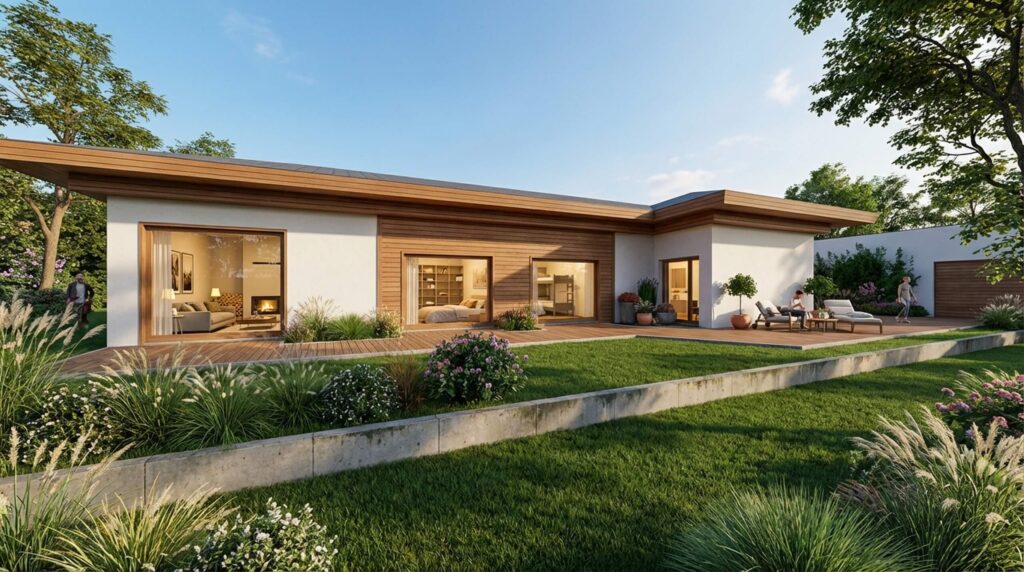 3104 m²11 month(s)from 99.000 USD
TALA 100
 3173 m²6 month(s)from 125.000 USD
TALA FOUR
164 m²7 month(s)from 79.000 USDPrivate: Haridas Villas, Tegallalang
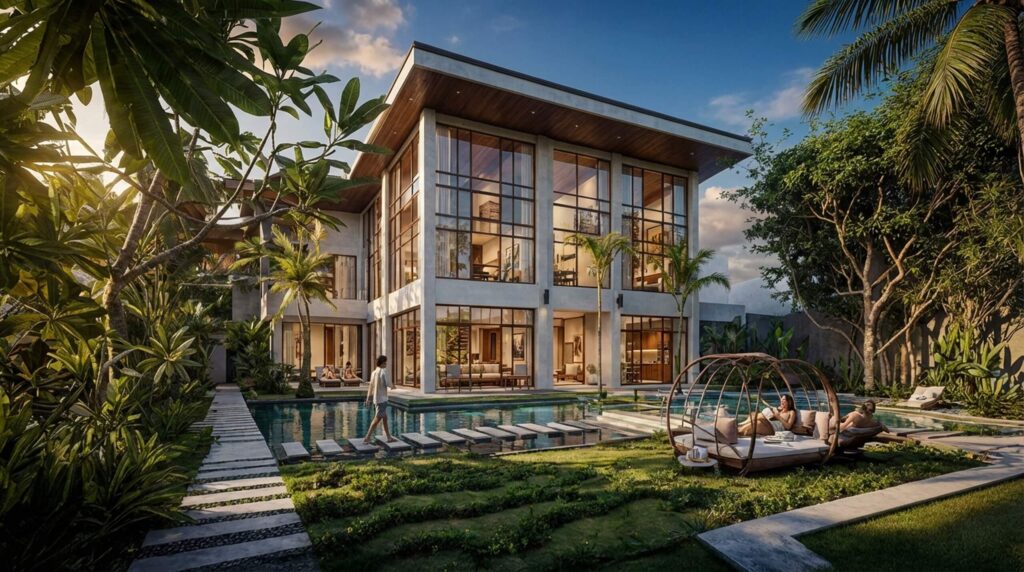 4344 m²16 month(s)from 290.000 USD
Radha
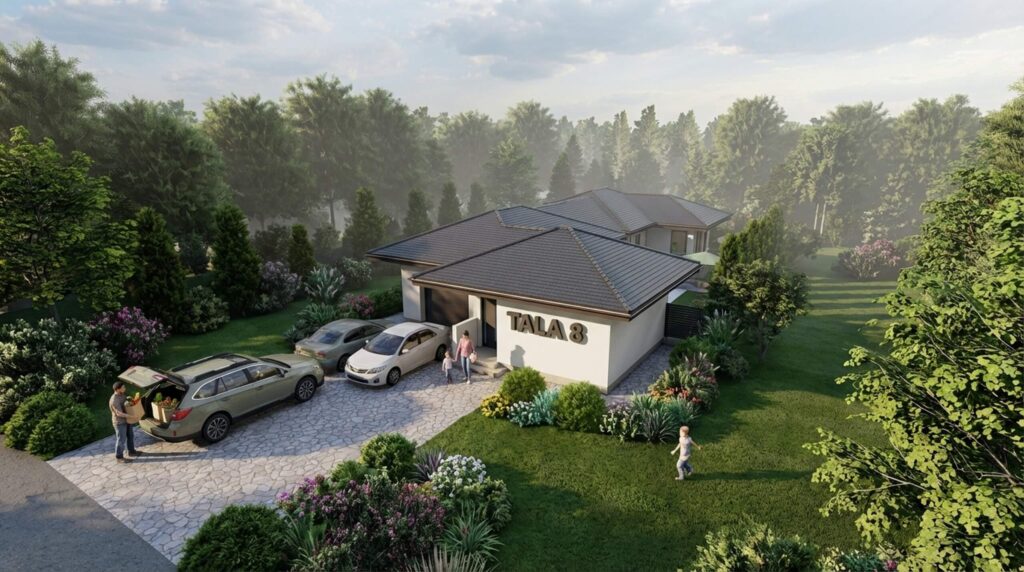 3124 m²6 month(s)from 123.000 USD
TALA 8
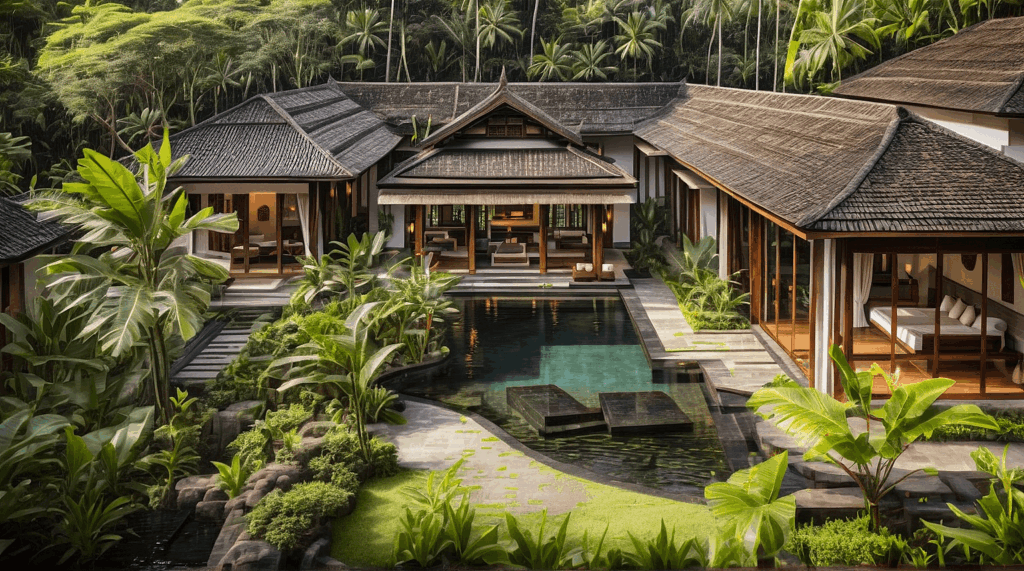 3180 m²7 month(s)from 142.000 USD
Vasudeva
 3127 m²9 month(s)from 177.000 USD
Mukunda
Start With Real Numbers, Not Guesses
Before finalizing your finishing works plan, check realistic cost ranges for your Bali villa project.
Available lands
 3254 m²5 min$ 631800Bali, All
 800 m²10 min$ 307882Bali, Tibubeneng
 1158 m²12 min$ 291996Bali, Mengwi
 680 m²15 min$ 110751Bali, Pererenan
 3000 m²15 min$ 1246921Bali, Tabanan
 1700 m²10 min$ 632257Bali, Kuta
 420 m²15 min$ 41897Bali, Tabanan
 515 m²7 min$ 570813Bali, Canggu
 585 m²8 min$ 165702Bali, Mengwi
 1000 m²10 min$ 384852Bali, Canggu
 2200 m²15 min$ 508005Bali, Canggu
 800 m²8 min$ 113300Bali, Ungasan
 1000 m²8 min$ 134544Bali, Bukit
 444 m²10 min$ 111000Bali, Tabanan
 2130 m²10 min$ 495776Bali, Pecatu
Planning a build in Bali?
Get a feasibility view, budget range and timeline from Teville.
Related guides
Integrated Furniture Fixings Hidden Brackets MEP Clearance Bali
Explore integrated furniture fixings with hidden brackets and MEP clearance in Bali. Learn installation tips, load guidance, and clean, accessible finishes.
8 min read
Epoxy Primer Moisture Barrier for Bali Interior Renovations
Explore epoxy primer and moisture barrier solutions for Bali interior renovations, delivering durable adhesion, moisture protection, and long-lasting finishes.
8 min read
Engineered Stone Countertop Fixing Support Standards Bali
Explore Bali s engineered stone countertop fixing and support standards. Installation tips, durability guidance, and compliance for lasting quality surfaces.
10 min read