Ceramic Tile Adhesive Selection Backer Prep for Bali Villa
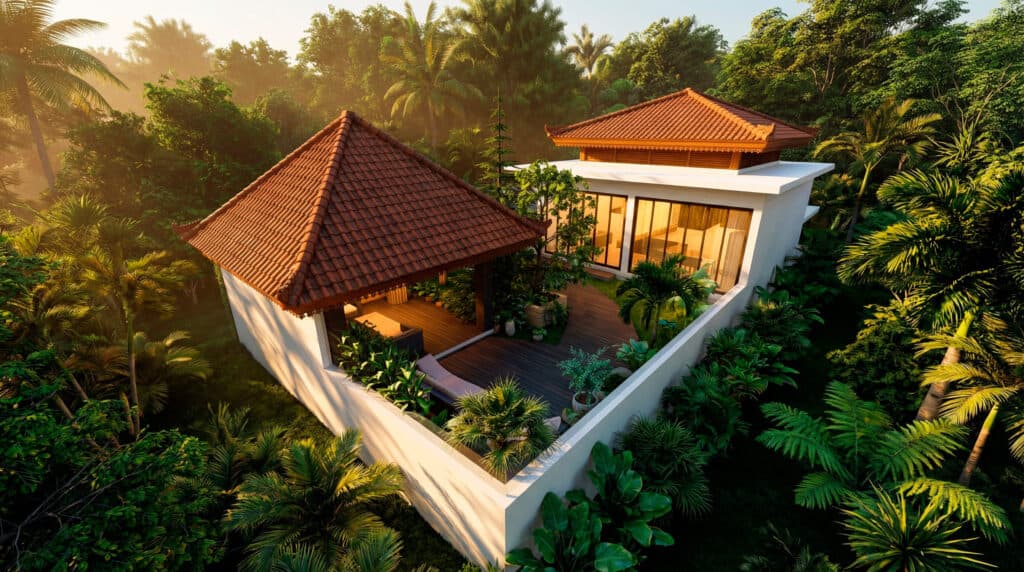
Ceramic Tile Adhesive Selection & Backer Prep for Bali Villas
1) Specific Problem/Question
Why do ceramic and porcelain tiles in Bali villas sometimes debond, crack, or show efflorescence within months, even when the tiles themselves are premium? In tropical, salt-laden, and high-humidity conditions, many failures trace back not to the tile, but to two upstream decisions: choosing the wrong adhesive (mastic vs. thinset, wrong class, wrong setting speed) and inadequate backer preparation (improper leveling, weak screeds, missing waterproofing, poor jointing). For villa ownership Bali and renovation Bali projects, the right pairing—moisture-tolerant adhesive plus a clean, stable, waterproofed backer—determines the longevity and visual quality of interior finishing Bali.
2) Technical Deep Dive: Adhesive Science and Backer Behavior in the Tropics
In Bali villa construction, ceramic and porcelain finishes must withstand humidity swings, wind-driven rain, UV exposure, salt air, and thermal expansion from strong sun. Two adhesive families dominate: premixed “mastic” and cement-based thinset mortar. Premixed tile adhesive (mastic) is convenient for small, dry, interior wall applications—think a kitchen backsplash under cabinets—because it’s ready to use and has tack that resists tile slip. However, it remains moisture-sensitive and soft in prolonged damp conditions. Reputable industry guidance and current sources indicate mastic should not be used for wet rooms, exteriors, heavy tiles, or floors. Thinset mortar—Portland cement, graded sand, and polymers—cures chemically and is the technical default for bathrooms, pool surrounds, balconies, and any large-format or dense tiles. As summarized in recent guidance (vura.ae), thinset is the more versatile, robust option for moisture and load.
Why does this matter in Bali? First, ambient moisture and intermittent wetting (showers, splash zones, condensation) demand an adhesive that gains strength even when the backer is cool and damp. Polymer‑modified thinsets (often designated C2 per EN 12004 / ISO 13007) provide stronger bonds to low-porosity porcelains and stabilize the mortar under thermal movement. Additives marked T (reduced slip) and E (extended open time) mitigate vertical sag and the faster skinning that comes with warm, breezy jobsites. For exterior decks and bathrooms, a deformable classification (S1 or S2) accommodates micro-movements from temperature and substrate deflection.
Backer boards and substrates in Bali villas vary: rendered masonry walls, fiber-cement boards, cement boards, and cementitious screeds over lightweight blocks or concrete slabs. Each interacts differently with humidity. Gypsum boards should be avoided in wet zones. Screeds must be sufficiently cured and dimensionally stable; a weak or dusty screed can cut adhesive strength by half. Where negative-side moisture pressure exists—e.g., ground-contact slabs in humid areas—capillary breaks and waterproofing are essential. We recommend liquid-applied or sheet membranes in showers, splash zones, balconies, and planter interfaces, with careful terminations at door thresholds and drains.
Tile format also governs adhesive behavior. Large-format porcelain (one edge ≥ 600 mm) needs near-perfect flatness and a medium-bed/large-and-heavy-tile (LHT) thinset to prevent lippage and avoid “pancaking” the mortar. Coverage requirements increase in the tropics: for exteriors and wet areas, aim for 95% contact under each tile (100% at edges) and a minimum of 80% in dry interiors. Achieve this with correctly sized notched trowels, straight-line ridge combing, and consistent back-buttering of tiles > 300 mm. Insufficient coverage invites water intrusion, freeze-thaw is not the issue here, but repeated wet-dry cycles with soluble salts can cause efflorescence, dark staining, or bond loss.
Movement joints are non-negotiable. Direct sun on balconies and terraces cycles tile assemblies daily: expansion joints at 3–4.5 m intervals in both directions (or per manufacturer/standard guidance) and at all perimeters, columns, and changes in plane. Seal with UV‑resistant elastomeric sealants; do not fill with grout or thinset. Indoors, joints in showers and at wall-to-floor transitions must be silicone or polyurethane, not rigid grout. This joint strategy decouples the tile from substrate shifts—critical in coastal climates.
Workability in heat matters. In Bali, thinset can skin quickly. Use E-class mortars (extended open time), mix in shaded zones with cool, clean water, and respect pot life. Dampen highly absorptive backers (do not saturate) so they don’t rob water from fresh thinset. Avoid tiling under direct, intense midday sun; wind accelerates evaporation too. Where schedules are tight, fast-setting C2F products help, but coordination is key; installers must place and adjust tiles within the shortened window.
Lastly, integration with villa utilities and furniture installation. Plumbing penetrations, shower niches, and electrical boxes interrupt membranes and backers. We pre-form and seal these points, then patch membranes before tiling. Built-in furniture plinths and kitchen carcasses are coordinated so that tile terminations, skirtings, and waterproofing lines remain continuous—no gaps beneath cabinets that can trap moisture or pests. Teville’s finishing teams sequence utilities, waterproofing, and tiling per our construction process to protect the assembly at every step.
3) Materials & Standards We Specify
We standardize on polymer‑modified cementitious thinsets matched to Bali’s climate and tile type:
- Adhesive classes: ISO 13007 / EN 12004 C2 (improved), with T (reduced slip) and E (extended open time). For exteriors and large-format tiles, add S1 (deformable); for severe movement or suspended decks, S2.
- ANSI references (compatibility check): A118.4/A118.15 for modified thinsets; A118.11 for bonding over exterior-grade plywood (rare in Bali wet zones); A118.10 membranes (waterproofing); A118.12 crack isolation. Methods guided by ANSI A108 and TCNA principles on jointing and coverage.
- Backer types: Cement board or fiber‑cement board for wet walls; cement‑sand plaster/render on masonry; properly cured cementitious screeds. Avoid gypsum in wet zones.
- Waterproofing membranes: Liquid-applied polymer‑cement or polyurethane, or sheet membranes with sealed seams. We use alkali‑resistant fiberglass tape at board joints under the membrane.
- Primers: Acrylic primers over porous/dusty renders and to consolidate weak screeds; epoxy primers where vapor suppression is required (project-specific).
- Grouts and sealants: Polymer-modified cement grouts for interiors; high‑performance or epoxy for wet/exterior; UV‑stable silicone/polyurethane at movement joints.
Where small, dry interior features are tiled (e.g., decorative splash over a dry vanity niche), a high‑quality premixed mastic can be considered; per current guidance, it should not be used in wet areas or exteriors (source). For Bali villas facing heavy spray or submerged edges, we review epoxy or specialty mortars case by case.
All selections are documented alongside drawings and mockups, and validated against our portfolio performance in similar conditions.
4) Step-by-Step Process We Use at Teville
1. Substrate evaluation
- Measure moisture content and look for dark, damp patches. Confirm screed/render cure (typically ≥ 7–14 days for renders, ≥ 21–28 days for screeds; verify by manufacturer).
- Check flatness: for large-format tiles, target ≤ 2 mm variation under a 2 m straightedge; standard tiles ≤ 3 mm. Mark high/low spots.
- Confirm structural integrity; repair hollow, weak, or powdery areas.
2. Surface preparation
- Mechanically abrade or scarify smooth concrete; remove laitance. Vacuum thoroughly—dust destroys bond.
- Patch and true surfaces with patching mortar or self‑leveler as needed. For walls, feather renders to tolerance.
- Tape backer board joints with alkali‑resistant mesh; skim with thinset. Seal penetrations (pipes, boxes) with compatible sealant and preformed collars.
3. Waterproofing and detailing
- Apply primer if specified. Install liquid or sheet membrane continuously across floors and 200–300 mm up walls, fully wrapping niches and benches.
- Reinforce corners and changes of plane with membrane fabric. Maintain slope to drains at 1–2% (10–20 mm per meter).
- Form movement joints at perimeters and transitions; protect with backer rod until sealing.
4. Adhesive selection and staging
- Choose C2TE S1 thinset for wet rooms and exteriors; S2 for high-movement decks or lightweight structures. Select LHT formulation for tiles ≥ 600 mm.
- In rare, dry interior splash zones, mastic may be considered for small ceramics; never for floors or wet/exterior.
- Plan mixing in shaded, clean areas; use potable water only. Respect ambient limits (typically 5–35°C); avoid tiling in direct sun and strong wind.
5. Mixing and troweling
- Mix to manufacturer’s ratio; rest (slake) for polymer hydration; re‑mix without adding water. Check pot life.
- Key-in (burn) a thin layer onto substrate with the flat side of the trowel, then comb full‑depth straight ridges with the notched side—ridges aligned in one direction.
- Back‑butter large or textured tiles. Typical notch sizes: 6–8 mm for small wall tiles, 10–12 mm for standard floors, 12–15 mm for large format. Verify coverage by lifting first tiles.
6. Setting tiles
- Press tiles perpendicular to ridges and slide 5–10 mm to collapse ridges. Maintain joint widths suited to tile caliber and movement needs (often 2–3 mm interior, 3–5 mm exterior).
- Use leveling clips for large-format assemblies sparingly and correctly; they are not a substitute for substrate flatness.
- Clean squeeze‑out immediately. Do not beat tiles into skinned mortar; discard and re‑apply if skin forms (finger test).
7. Curing, grouting, and movement joints
- Allow thinset to cure per datasheet—typically 24–48 hours before grouting; longer in cool/humid conditions. Protect from rain and foot traffic.
- Grout with specified product; wash carefully to avoid haze. After grout cures, install elastomeric sealant at all movement joints and changes of plane.
8. Perimeter detailing and interfaces
- Terminate balcony tiles with drip edges; flash at doors with waterproof thresholds.
- Coordinate with cabinetry and furniture installation to keep plinths above finished floor by a sealed shadow gap, preventing moisture wicking.
- Integrate with villa utilities: slope to wet-room drains, maintain clear weep holes, and seal around penetrations after trim-out.
Every stage is quality‑checked against our method statements and validated by mockups, as seen across our villa projects.
5) Costs & Timeline (Indicative)
Budgets vary by tile size, area complexity, membrane type, and site logistics. For planning Bali villa construction and renovation Bali, typical ranges for finishing works (adhesive, prep, and waterproofing; excluding tile supply) are:
- Backer prep and leveling: IDR 120,000–250,000/m² (surface repairs, patching, tolerance corrections).
- Waterproofing (wet rooms/balconies): IDR 180,000–350,000/m² depending on system and detailing needs.
- Adhesive and setting (C2TE S1/S2 thinset, standard formats): IDR 220,000–420,000/m²; large format/LHT and complex layouts toward the upper band.
Timelines (after substrate cure):
Standard bathroom (15–20 m 164 m²7 month(s)from 79.000 USD
Private: Haridas Villas, Tegallalang
 2144 m²11 month(s)from 104.000 USD
Narayana
 1from 198.000 USD
Private: Haridas Villas
 3127 m²9 month(s)from 177.000 USD
Mukunda
164 m²7 month(s)from 79.000 USDTALA TWO
 3104 m²11 month(s)from 99.000 USD
TALA 100

Want to calculate?
 4344 m²16 month(s)from 290.000 USD
Radha
 3124 m²6 month(s)from 123.000 USD
TALA 8
 172 m²8 month(s)from 120.000 USD
Keshava
 3173 m²6 month(s)from 125.000 USD
TALA FOUR
 3180 m²7 month(s)from 142.000 USD
Vasudeva
Start With Real Numbers, Not Guesses
Before finalizing your finishing works plan, check realistic cost ranges for your Bali villa project.
Available lands
 500 m²15 min$ 124692Bali, Kaba Kaba
 300 m²55 min$ 32475Bali, Tegelalang
 1000 m²10 min$ 184729Bali, Kutuh South Bali
 2000 m²15 min$ 110837Bali, Karangasem
 960 m²15 min$ 91034Bali, Mengwi
 444 m²10 min$ 111000Bali, Tabanan
 1720 m²2 min$ 241478Bali, Tabanan
 3700 m²15 min$ 738177Bali, Tabanan
 2700 m²30 min$ 314224Bali, Sidemen
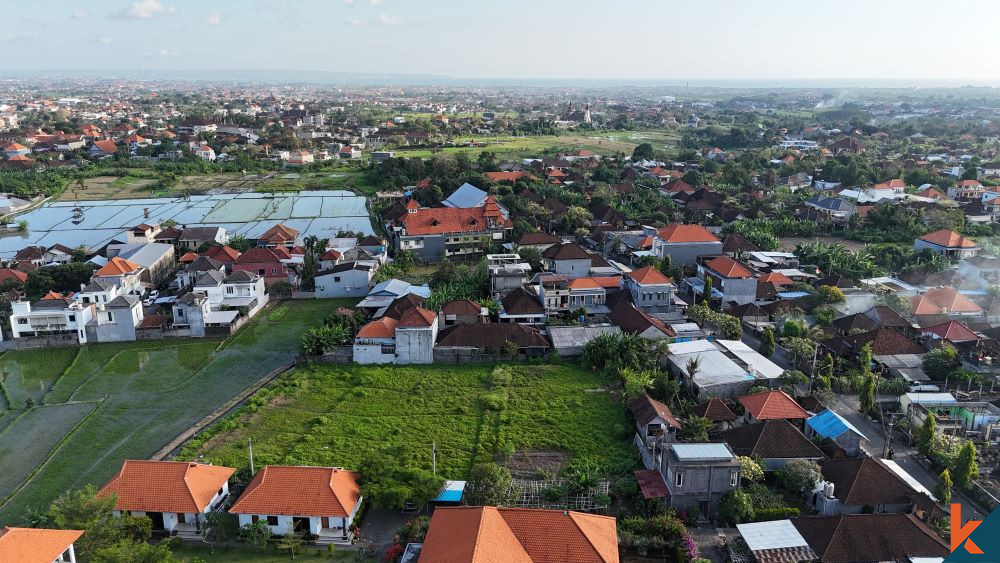 2000 m²10 min$ 243842Bali, Mengwi
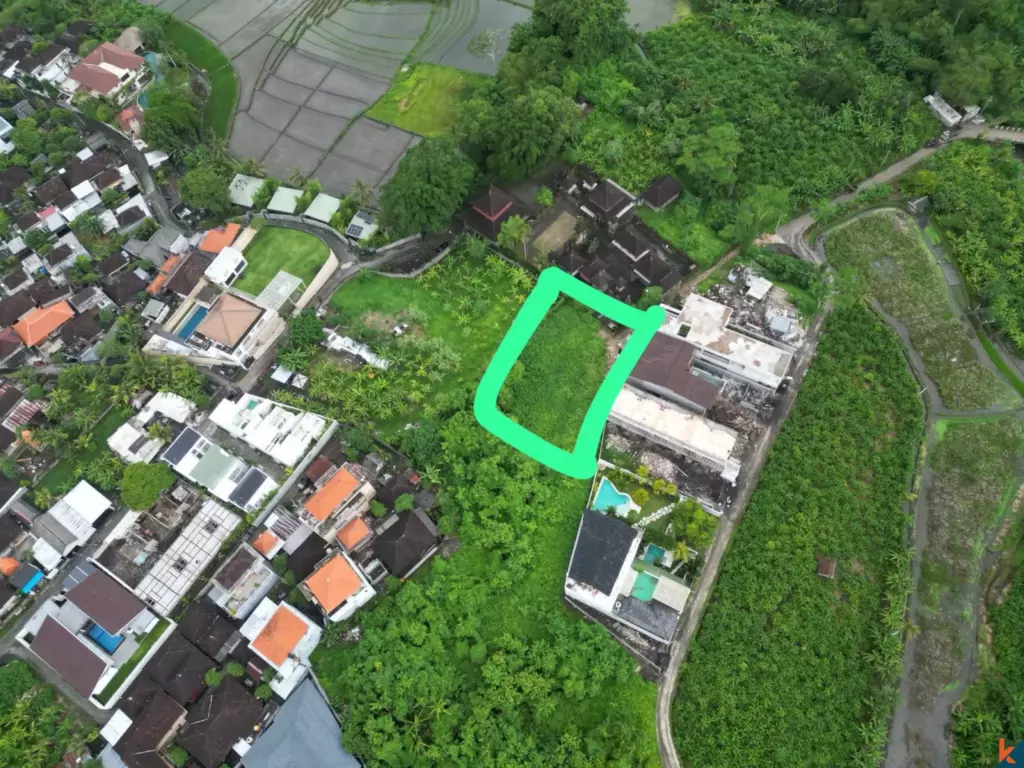 600 m²12 min$ 101970Bali, Mengwi
 7000 m²36 min$ 284483Bali, Gianyar
 5000 m²8 min$ 424877Bali, Ungasan
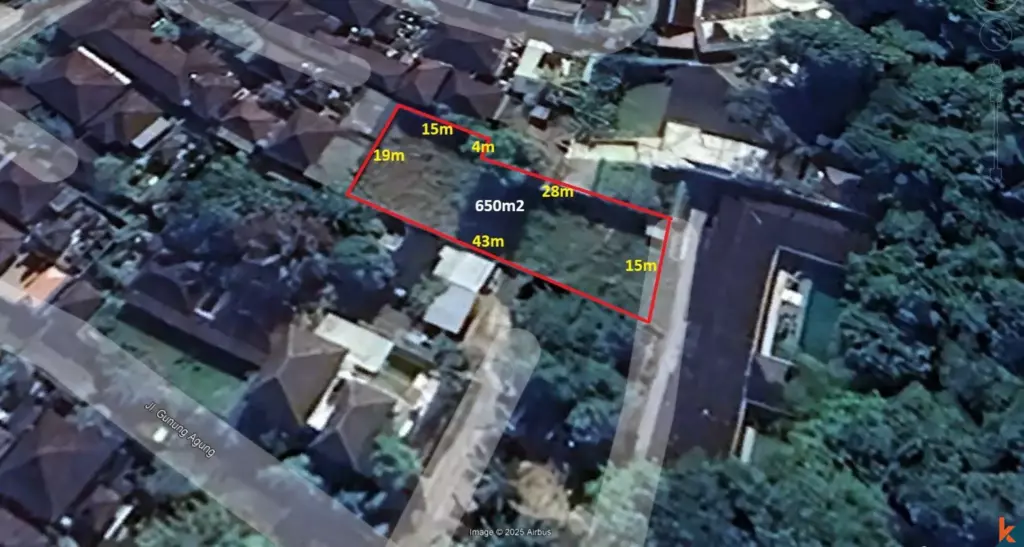 660 m²10 min$ 175567Bali, Mengwi
 204 m²5 min$ 40899Bali, Kedungu
Planning a build in Bali?
Get a feasibility view, budget range and timeline from Teville.
Related guides
Bedugul Highland Frost Heave Prevention Drainage Costs Bali
Expert guide to foundation frost heave prevention and drainage solutions for Bedugul highland villas in Bali. Learn costs, techniques, and best practices.
10 min read
Ubud Bamboo Structure Permits Fire Ratings Bali
Navigate Ubud bamboo villa permits, fire safety ratings, and insurance costs. Expert guide to building codes and compliance requirements in Bali.
10 min read
Pecatu Cliff Villa Cantilever Foundations: Engineering Costs Bali
Expert guide to cantilever foundation engineering costs for cliff-edge villas in Pecatu, Bali. Learn structural requirements, pricing, and construction timeline
10 min read